


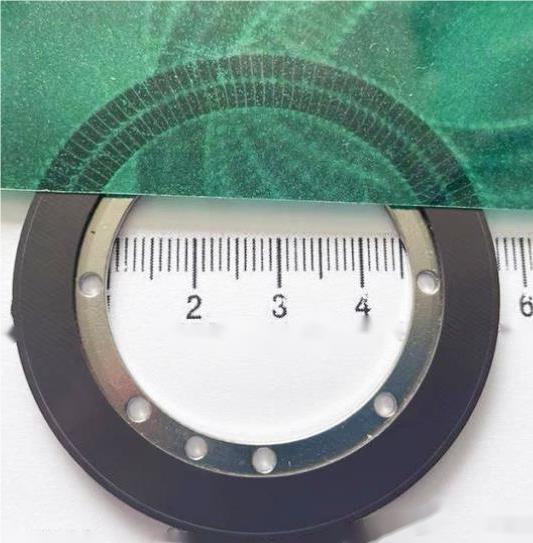
1.Does rubber conduct electricity?
Pure rubber (silicone, EPDM, FKM) is an electrical insulator. To make it conductive, electrically conductive fillers – such as carbon black, nickel‑plated graphite, silver‑coated aluminium or silver‑coated copper – are homogeneously dispersed into the rubber matrix. When the filler concentration exceeds the percolation threshold, a continuous conductive network is formed.
 |  |
By selecting the filler type and loading, volume resistivity can be adjusted from 0.004 Ω·cm (highly conductive) up to 10⁵ Ω·cm (anti‑static). This enables applications from EMI gaskets and grounding pads to static‑dissipative tubing and flexible electrodes.
2. OBT conductive rubber – product families
OBT supplies three main product forms:
- Conductive rubber sheet / film (die‑cut or roll)
- Conductive rubber tubing (extruded, smooth bore)
- Custom conductive gaskets (moulded or die‑cut to drawing)
All materials are available with different base polymers (silicone, EPDM, FKM) and filler systems.
2.1 Conductive silicone sheet and film

2.1.1 Carbon‑black filled series (OBT‑CB‑60A) – cost‑effective anti‑static / light shielding
- Colour: black
- Hardness: 60 ±5 Shore A
- Volume resistivity: 10 Ω·cm
- Temperature range: –50 °C to +240 °C
- Shielding effectiveness: 30‑50 dB (50‑500 MHz)
- Typical use: base station gaskets, consumer electronics grounding, ESD work surfaces
2.1.2 Metal‑filled series (high performance, high shielding)
| Filler | Volume resistivity (Ω·cm) | Shielding effectiveness @10 GHz | Temp. range | Key property |
|---|---|---|---|---|
| Ni/C (nickel‑graphite) | 0.1 | 100 dB | –45 °C to +160 °C | good corrosion resistance, cost‑effective |
| Ag/Al (silver‑aluminium) | 0.008 | 105 dB | –55 °C to +160 °C | lightweight, high frequency shielding |
| Ag/Cu (silver‑copper) | 0.004 | 120 dB | –65 °C to +160 °C | highest conductivity, military grade |
- Hardness: 70 ±5 Shore A
- Tensile strength: 1.5 – 2.0 MPa
- Flammability: UL94 HB
- Typical applications: telecom cabinet EMI gaskets, aerospace interface seals, medical device shielding
Thickness and dimensions (sheet/film)
- Thickness range: 0.2 mm (thin film) to 5.0 mm (thick sheet)
- Supply form: rolls (width ≤500 mm) or sheets (300×300 mm, 500×500 mm)
- Optional conductive pressure‑sensitive adhesive (PSA) backing for easy assembly
2.1.2.1 Nickel-Plated Graphite 75 Shore A High Conductivity Rubber Specification
This is a EMI shielding grade conductive rubber with the following characteristics:
- Broadband high-efficiency shielding: ≥95 dB from 100 MHz to 10 GHz – suitable for military electronics, radar, and communication equipment shielding/sealing
- Wide temperature range: –45°C to +150°C – ideal for automotive, aerospace, and harsh outdoor environments
- RoHS compliant & fungus resistant: Meets GJB requirements for military applications
- HB flammability rating: Satisfies basic fire safety requirements
Base Material
- Rubber Matrix: Silicone
- Conductive Filler: Nickel-Plated Graphite (Ni/C)
| No. | Test Item | Standard | Unit | Requirement |
|---|---|---|---|---|
| 1 | Volume Resistivity | n/a (no direct ISO equivalent) | Ω·cm | ≤ 0.1 |
| 2 | Density | ISO 2781:2007 | g/cm³ | 2.0 ± 0.2 |
| 3 | Hardness | ISO 7619-1:2004 | Shore A | 75 ± 5 |
| 4 | Tensile Strength | ISO 37:2005 | MPa | ≥ 2 |
| 5 | Elongation at Break | ISO 37:2005 | % | ≥ 100 |
| 6 | Tear Strength | ISO 34-1:2004 (MOD) | kN/m | ≥ 6.2 |
| 7 | Compression Set (100°C × 70h) | ISO 815-1:2008 | % | ≤ 25 |
| 8 | Maximum Continuous Service Temperature | — | °C | 150 |
| 9 | Low Temperature Brittleness | ISO 812:1991 (EQV) | °C | -45 |
Shielding Effectiveness (per MIL-DTL-83528, dB)
| Frequency | Field Type | Minimum Shielding Effectiveness |
|---|---|---|
| 100 MHz | Electric Field | ≥ 95 dB |
| 500 MHz | Electric Field | ≥ 100 dB |
| 1 GHz | Plane Wave | ≥ 100 dB |
| 2 GHz | Plane Wave | ≥ 100 dB |
| 10 GHz | Plane Wave | ≥ 100 dB |
Other Properties
| No. | Item | Standard / Method | Requirement |
|---|---|---|---|
| 10 | Volume Resistivity after Heat Aging¹ | — | ≤ 0.1 Ω·cm |
| 11 | Fungus Resistance | GJB 150.10A-2009 | Better than Class 1 (0–1) |
| 12 | Flammability | — | HB |
| 13 | RoHS Compliance | — | Yes (Compliant) |
Notes:
- Heat aging condition: 150°C × 48 hours
- Compression set condition: 25% compression, 100°C × 70 hours
2.2 Conductive rubber tubing

Conductive tubing combines fluid / air handling with electrical continuity – used in medical, industrial and ESD‑sensitive environments.
Specifications
- Base polymers: silicone (biocompatible), EPDM (weather‑resistant), FKM (fuel/oil resistant)
- Fillers: carbon black (anti‑static), Ni/C (EMI shielding), silver‑coated particles (high conductivity)
- Volume resistivity: 0.5 Ω·cm to 10⁵ Ω·cm
- Inner diameter: 1 mm to 50 mm
- Wall thickness: 1 mm to 5 mm
- Length: continuous extrusion up to 50 m per roll
Typical applications
- Medical: ECG/EEG electrode leads, TENS therapy tubes (soft, biocompatible)
- Industrial: anti‑static vacuum hoses, powder conveying tubes (prevents electrostatic sparks)
- Wearable devices: flexible conductive channels in smart clothing
- R&D / makers: stretch sensors, conductive connectors (compatible with Arduino, Adafruit)
Customisation – transparent or coloured compounds, multi‑layer walls, conductive adhesive layer, pre‑fitted connectors.
2.3 Conductive rubber gaskets (die‑cut / moulded)
Using precision die‑cutting or compression moulding, OBT converts conductive rubber sheets into any 2D or 3D shape – ideal for enclosure seals, connector gaskets and automotive electronics.
Capabilities
- Die‑cutting tolerance: ±0.1 mm
- Minimum hole diameter: 0.5 mm
- Optional: liner release paper, PSA backing, pick‑and‑place holes
- Low‑volume prototyping: 3‑5 days
Compliance
- IP67 / IP68 possible (with appropriate closure force)
- 96 h salt spray test passed (metal‑filled series)
- RoHS, REACH, halogen‑free
3. Quick selection table (engineering overview)
| Product form | Typical filler | Volume resistivity (Ω·cm) | Hardness (Shore A) | Temp. range | Main application |
|---|---|---|---|---|---|
| Sheet / film | Carbon black | 10 | 60 | –50 to +240 °C | ESD pads, grounding |
| Sheet / film | Ni/C | 0.1 | 70 | –45 to +160 °C | Telecom EMI gaskets |
| Sheet / film | Ag/Al | 0.008 | 70 | –55 to +160 °C | Aerospace |
| Sheet / film | Ag/Cu | 0.004 | 70 | –65 to +160 °C | Military, medical |
| Tubing | Carbon black | 10² – 10⁵ | 50‑70 | –30 to +200 °C | Anti‑static hoses |
| Tubing | Ni/C | 0.5 – 10 | 60‑80 | –45 to +150 °C | Sensing, signal |
| Gasket | Ag/glass | 0.01 | 65 | –55 to +160 °C | Waterproof + EMI |
4. Why OBT for conductive rubber?

- In‑house manufacturing – compounding, moulding, extrusion and die‑cutting under one roof → consistent batch quality.
- Fast customisation – samples in 3 days, production lead time 7‑15 days (volume dependent).
- Product customization – We can customize the thickness, dimensions, and apply 3M adhesive backing if required, according to your specifications..
- Global logistics – DHL, FedEx, sea freight; small parcels accepted.
OBT – reliable partner for conductive rubber solutions, from prototype to series production.
Whether you need a specific volume resistivity, custom thickness, die‑cut shape, conductive tubing dimensions, or 3M adhesive backing – our technical team is ready to support you.
Contact us to discuss your requirements.
We’ll support you selecting the right filler system (carbon black, Ni/C, Ag/Al, Ag/Cu) and provide engineering recommendations according to your application.
From prototype sampling to volume production, OBT delivers reliable, customised conductive rubber solutions.
👉 Get in touch now – let’s make your idea work.
FAQ
No. Pure rubber (silicone, EPDM, NBR, FKM) is an electrical insulator. Conductive rubber is produced by adding conductive fillers such as carbon black, nickel‑graphite or silver‑coated particles. The resulting material can achieve volume resistivity from 0.004 Ω·cm to over 10⁵ Ω·cm.
For shielding effectiveness >100 dB at 1‑10 GHz, we recommend silver‑coated aluminium (Ag/Al) or silver‑coated copper (Ag/Cu) filled silicone. Ag/Cu gives the lowest volume resistivity (0.004 Ω·cm) and highest shielding (120 dB). For cost‑sensitive projects with moderate requirements (100 dB), nickel‑graphite (Ni/C) is a good alternative.
Yes. We offer custom extrusion with ID from 1 mm to 10 mm and wall thickness from 1 mm to 5 mm.
Standard carbon‑black filled silicone withstands –50 °C to +240 °C.


